Thursday, 10 March 2011

Why World Food Prices Are Poised to Keep Climbing

rising food prices wheat lester brown photo
Photo credit: marfis75/Creative Commons
In February, world food prices reached the highest level on record. Soaring food prices are already a source of spreading hunger and political unrest, and it appears likely that they will climb further in the months ahead.
Graph on World Monthly Food Price Index, January 1990-February 2011
As a result of an extraordinarily tight grain situation, this year's harvest will be one of the most closely watched in years. Last year, the world produced 2,180 million tons of grain. It consumed 2,240 million tons, a consumption excess that was made possible by drawing down stocks by 60 million tons. (See data at www.earth-policy.org.) To avoid repeating last year's shortfall and to cover this year's estimated 40-million-ton growth in demand, this year's world grain harvest needs to increase by at least 100 million tons. Yet that would only maintain the current precarious balance between supply and demand.
Graph on World Grain Stocks as Days of Consumption, 1960-2010
To get prices back down to a more acceptable level, it would take perhaps another 50 million tons for a total increase of 150 million tons. Can the world boost this year's grain harvest by 150 million tons or even 100 million tons? It is possible, because we have had annual harvest jumps of 150 million tons twice over the last two decades, but this year it does not appear likely.
In assessing the world grain harvest prospect, we focus on the big three grains -- rice, wheat, and corn -- that together account for nearly 90 percent of the harvest. Barley, oats, sorghum, rye, and millet make up the remainder.
We start by looking at rice because, as an irrigated crop, its production fluctuates little. The average annual gain in the world rice harvest, which totaled 452 million tons last year, has been 7 million tons. Let's assume that we get a 10 million ton gain in rice this year.
Wheat, now the world's leading food grain, is much more difficult to assess because so much of the harvest is rain-fed, making yields as variable as the rainfall. But since most wheat is winter wheat, which is planted in the fall, is dormant in winter, and resumes growth in early spring, we know that this year the wheat area planted is up by 3 percent. We also have an early sense of the crop's condition.
We begin with the big four wheat producers -- China, India, the United States, and Russia -- which collectively produce half the world's wheat. China, the leading wheat producer, was until very recently suffering the worst drought in its winter wheat-growing region in 60 years. Although rain and snow in late February and early March rains and snow have lessened the drought effect, we could easily see China's wheat harvest drop from 115 million tons last year to 110 million tons this year. India officially expects an 82-million-ton harvest, up 1 million tons from last year.
In the United States -- the third ranking wheat producer -- the southern Great Plains are suffering from drought. As of the end of February, the U.S. winter wheat crop condition was among the worst in the last 20 years. The U.S. Department of Agriculture estimates the harvest will drop from 60 million tons to 56 million, and this may be conservative.
Russia's wheat harvest should be up sharply from last year's heat-devastated crop of 42 million tons. But last fall it was too dry to plant one fifth of its winter wheat, which means many more farmers will plant lower-yielding spring wheat -- wheat that is planted in the spring and is harvested in the late summer or early fall. With a little luck, Russia should harvest roughly 58 million tons of wheat.
Adding in the rest of the world's expected wheat production, can we match last year's world wheat harvest figure of 645 million tons? We should exceed it. The International Grains Council estimates this year's harvest at 672 million tons, up by 27 million tons over 2010. This contrasts with the Canadian Wheat Board estimate of 653 million tons, a gain of only 8 million tons. For calculation purposes, let us assume that this year's wheat harvest is up by 20 million tons for a total of 665 million tons.
Now for corn. Two countries tell the story here: the United States and China, which produce 40 and 20 percent, respectively, of the 814-million-ton world corn harvest. Combining the expected 4 percent increase in U.S. planted area with a 10-ton-per-hectare yield, the U.S. corn harvest could increase by 25 million tons. China's corn harvest, which has fluctuated around 165 million tons for the last three years, is not likely to increase given its tight water situation. For the remaining 40 percent of the corn harvest, we will assume a gain of 15 million tons. All together this takes the world harvest up by 40 million tons.
Let's review the global numbers. It will take 100 million tons of additional grain just to maintain the current precarious situation and close to 150 million tons to restore some semblance of stability in the world grain market. We can count on a 10-million-ton increase in this year's rice harvest. We are hoping for a 20-million-ton rise with wheat and a 40-million-ton jump in corn. Let us also assume that minor cereals increase by 10 million tons over last year. This would give us a total increase of 80 million tons, not enough to prevent further price rises.
Table on Grain Production in Selected Countries and the World, 2010 and Estimates for 2011
Estimating world grain production is becoming more complex and difficult. On the demand side of the equation, there are three sources of growth: the addition of 80 million people per year, some 3 billion people moving up the food chain consuming more grain-intensive livestock products, and the massive conversion of grain to fuel ethanol in the United States.
On the supply side, there was a time when grain production was on the rise almost everywhere. That world is now history. In a number of countries, grain harvests are shrinking because of aquifer depletion and severe soil erosion. Rising temperatures are also taking a toll. And some agriculturally advanced countries have run out of new technology to raise land productivity.
In 18 countries containing half the world's people, overpumping for irrigation is depleting aquifers. Among the countries where harvests are falling as aquifers are depleted are Saudi Arabia, Syria, and Iraq. World Bank data for India indicate that 175 million people are being fed with grain produced by overpumping, which by definition is a short-term phenomenon. The comparable number for China is 130 million people.
In some countries such as Mongolia and Lesotho, grain production has fallen by half or more in recent decades as severe soil erosion has led to wholesale cropland abandonment. In North Korea and Haiti, soil erosion is undermining efforts to raise output.
In several agriculturally advanced countries, the backlog of unused technology has largely disappeared. Japan's rice yield per acre has not increased for 16 years. China's rice yield, now approaching that in Japan, may also be about to level off.
In France, Europe's leading wheat producer, yields have been flat for a decade. Wheat yields have also plateaued in Germany and the United Kingdom. In Egypt, Africa's leading wheat producer, wheat yields have been flat for six years.
 Graph on Wheat Yields in Egypt, France, and the United Kingdom, 1960-2010
At this point, it seems unlikely that we will get the 100-million-ton grain harvest increase this year that would be needed just to maintain the current rather precarious situation. Instead, it looks more likely that we will reduce stocks further. It may be somehow possible to avoid a rise in world food prices in the months ahead, but at this point it seems unlikely.

Thursday, 3 March 2011

Biodegradable Products Could Be the Answer to Environmental Pollution

Perhaps the greatest concerns for every country in the recent days are the issues relating to environmental pollution. Scientists and administrative authorities are trying to address the problems by combined ventures. On the other hand commercial establishments are coming up with innovative ideas and products befitting the requirements and preference of customers who are steadily turning towards reusable products and biodegradable products that are eco-friendly.
Biodegradable Products
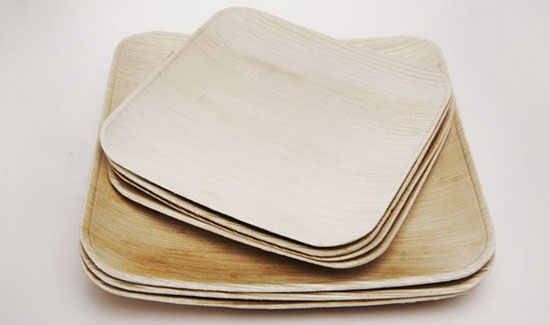
Biodegradable products undergo a natural decay and merger with the soil after its task is over and when it is thrown as waste. Some of the most popular biodegradable are disposable plates, containers for food and saucers. They have the capability of improving the capacity of the soil to hold water. Hence there is comparatively less soil erosion. Permeability as well as infiltration capabilities of heavier soils are also improved with the product. Landfill with biodegradable products also results in less pollution due to methane emissions.
Addressing Landfill Waste Problems
One of the best purposes served with biodegradable products is the addressing of landfill waste problems across the globe. In the recent years the amounts of wastes in landfill have been increasing consistently. Most of these wastes are harmful for the environment creating pollution. Use of biodegradable helps diversion of such wastes. Over the years the diversion of biodegradable wastes from landfill has been quadrupled and yet it covers only 9% of the entire waste and thus 91% still goes to the landfills. While wastes like leaves, yard debris, and grass can help formation of compost and does not affect the environment adversely, use of products can help the cause tremendously.
Types
Numerous types of biodegradable can be considered. For instance; such tableware includes plates, trays, containers, bowls, saucers, serving plates, utensils, and cups. Disposable boxes are also a very popular type of biodegradable product. Good thing about it is that all products are usually subjected to stringent laboratory tests leaving no room for their becoming harmful to environment around in any manner. Such tests aim at finding out by way of analyzing the components as to what fraction of the organic carbons have been derived from the renewable resources.
With gradual shift of consumer preference towards natural, pure and organic from the synthetic, biodegradable products are assuming greater significance in the market.
biodegradable cups, biodegradable plates, biodegradable clamshells, biodegradable take-out containers

Waste and Sustainability - Biodegradable and Non-Biodegradable Materials

Rubbish, garbage, trash, junk, litter, refuse; we throw stuff out every day and nearly every aspect of our modern life creates some form of waste. We throw waste in the bin and we wash waste products down our drains when bathing and cleaning. But, we live on a finite planet and all the waste we are creating is having a very real and negative impact on the Earth.
Our waste can be recognised as either biodegradable or non-biodegradable and this can be a useful distinction when we consider our product choices and our waste disposal.
Biodegradable Materials
Biodegradable matter is generally material from an organic origin that when disposed of will decompose by a natural process. This means it will breakdown and decay into simpler forms of matter.
The process of decomposition is essential within the natural environment for new growth and development of living organisms; it is the way nature is able to recycle the finite matter of the living world. When organic matter breaks down it returns energy and materials used by nature to generate more energy and organic materials. This is the process by which the planet is able to sustain life.
Biodegradable matter is any food scraps, garden waste, or materials or products made from plant or animal derived substances or artificial/man-made materials that are similar enough to organic matter and thus can still be broken down by a natural process.
Non-biodegradable Materials
Non-biodegradable material is in-organic or man-made matter that will not decompose. Any material that is non-biodegradable does not decay or breakdown into simpler forms of matter.
This means that when disposed of by us, nature cannot reuse these materials to fuel the cycle of life and it will remain as pollution in the environment. It also means, all the resources and energy used to make the material in the first place, are trapped within the waste. Because nature cannot breakdown the material; the matter and energy cannot be reclaimed and reused by the environment to generate more organic matter and energy.
Relying on non-biodegradable materials and ingredients is an unsustainable and polluting practice. It traps resources and energy that can not be re-claimed in materials that cannot be broken down. Resulting in masses of polluting substances and rubbish that cannot every truly be digested by the planet.
Fortunately we are able to recycle some non-biodegradable waste. Meaning the materials can be reused to make new products and materials. This saves natural resources and reduces the impact of the vast amounts of in-organic waste ending up as landfill and pollution throughout the world.
Where does our waste go?
Our waste can end up in a number of places; landfill and incineration, recycle centres, sanitary sewers or septic tanks, as compost or as litter and pollution in both our natural environment and urban towns and cities. In order to reduce the negative environmental impact of our waste we need to consider where and how we dispose of things.
When we clean our homes and ourselves the products we use end up as waste washed down the drains and into sewers or septic tanks. Sewerage waste is treated which changes most of that waste to carbon dioxide and water with some minerals, waste elements and non-biodegradable materials left over. The treated water is then pumped back into a river or ocean. This means that the non-biodegradable matter in the products we use may eventually end up as pollution in our waterways.
A great deal of our household and commercial waste ends up in landfill sites which are large holes in the ground filled with all kinds of rubbish. Or in certain areas where there is no space for landfill waste is burned, both practices are damaging to the environment. Luckily we are able to reduce the amount of waste that ends up as landfill or in incinerators by recycling and composting.
But this means we must dispose of our rubbish thoughtfully. When recyclable or biodegradable materials are not disposed of properly and end up as landfill or incinerated they contribute to the mass of non-biodegradable and polluting waste; their potentially reusable and sustainable properties lost.
It is important to try and ensure any biodegradable waste is composted and does not end up in landfill. Landfill is designed to inhibit the natural process of decay as uncontrolled decomposing waste can contribute to ground water pollution, methane gas emission and unstable sub-soil conditions. It has been discovered that many organic materials are "mummified" by the conditions of landfill and do not appear to breakdown or only at a vastly diminished rate.
How can we improve our methods of waste disposal?
  • In order to ensure biodegradable waste is disposed of correctly when need to support composting through our local councils or within our own homes and communities
  • Create your own compost bin, one that suits your space, needs and lifestyle; we can all compost our kitchen and garden scraps and even newspaper and paper products
  • Avoid throwing away any materials that can be reused or recycled. Insure where available they end up in a recycling facility
  • Look for cleaning products that clearly state certified biodegradable ingredients
  • Look for certified biodegradable alternatives to disposable plastic items
  • Reduce consumption of non-biodegradable products by limiting our dependency on plastics, including disposable goods, shopping bags, packaging and wrapping
  • Purchase goods made from recyclable materials and always reduce, reuse and recycle
By moving away from a reliance non-biodegradable ingredients and materials we can reduce the amount of toxic waste clogging up the Earth. If we consider the impact of our product choices and dispose of our waste with a little more care, we can improve the sustainability and limit the negative effects of our modern disposable lifestyle.

The Facts About Biodegradable Products

Biodegradable materials are supposed to be environmentally friendly but sometimes this expectation isn't entirely true.
What Is Biodegradable?
In order for a product to be classified as a biodegradable product, it must be able to be broken down into its constituent natural elements and be absorbed by the environment. Real biodegradable material will often break down into:
  • Simple organisms
  • Carbon
  • Hydrogen
  • Bacteria
  • Fungi
  • Oxygen - Carbon dioxide Co2 and water H2O
Because a product is advertised as biodegradable it doesn't necessarily mean that it is good for the environment. No guidelines exist with which to aid buyers of products which are advertised as biodegradable. These products may actually be biodegradable since they eventually break down into their natural elements but it doesn't necessarily mean that they are safe for the environment.
Being Biodegradable Isn't Always Safe
Different biodegradable elements tend to break down into natural elements over a certain period of time. Some of them break down into natural elements which may be harmful to the health of both flora and fauna alike. One such element is nonylphenolethoxylate otherwise known as NDE; this element is a constituent part of many cleaning supplies we use today. The natural elements that make up NDE include carbon, hydrogen as well as oxygen, thus most people assume that when it is broken down it should break down into these same elements. However this is not the case, NDE actually breaks down to become a harmful benzene compound that is damaging to female reproductive organs.
How Long It Takes Is another Factor
Something else that is of importance and considerable concern is the period that a product takes to break down into its constituent parts. Something like a loaf of bread is totally biodegradable. It can actually break down into simple sugars in a mere matter of days. Paper on the other hand may take up to 5 months to degrade into its proper constituent elements.
One other problem is the disposal methods that are used to get rid of the products we wish to dispose of. A natural compost pile makes it easy for normal food to degrade easily. If waste on the other hand is placed among other forms of garbage natural and unnatural alike, it may take months to or even years to decompose. Researchers have found apple cores that were more than two decades old in garbage landfills. If you seek out better ways to dispose of biodegradable material, you can help speed up the degrading process and make the resultant products safer.
This is are average indicators of the period of time that it takes to breakdown a biodegradable product completely
  • Paper: 2-5 weeks
  • Banana peel: 3-5 weeks
  • Orange peels: 6 months
  • Cotton rags 1-5 months
  • Cigarette butts: 1-12 years
  • Plastic or cardboard milk carton: 5 years

Returning To NatureAny products that come from nature such as plants, minerals and animals will eventually return to their natural states over time. Products that are man-made such as petrochemical products cannot be broken down by microorganisms into natural elements. They will simply remain non-degradable and will continue to litter the earth for centuries.
biodegradable cups, biodegradable plates, biodegradable clamshells, biodegradable take-out containers

Biodegradable Plastic: The Benefits

As its name suggests is a type of plastic, which can be decomposed naturally, thus less harmful to the environment. Biodegradable plastic can be composed from renewable raw materials. Environment savior biodegradable plastic is a great method to take all the advantages of the plastic yet save the environment. This is the reason why biodegradable bags are gaining popularity.
As we all know that most of the retail packaging is done with the help of plastic packaging products and the booming packaging industry is a potential threat to our environment. The boom in this plastic packaging sector is coming at the cost of our environment. Nowadays, the use of plastic is unlimited as even one cannot imagine his life without the plastics, for example the advertising companies are making the use of plastic heavily for their advertising banners. Plastic is cheap, durable but harmful to the environment. According to a survey more than 2.5 billion plastic bags per year are dumped in an average sized country alone.
Ordinary plastic: A threat to the atmosphere
It is not like that the ordinary plastic is un-degradable, but it takes hundreds of years for ordinary plastic to degrade. If it is not done properly then plastic can be the food of any animal causing the loss of their life. It is also the reason of greenhouse gas emission and pollution and even more harmful because it generates several types of harmful gases.
Why biodegradable plastic?
There are many sanctions created against the plastic bags in many countries but none were successful because nobody can ignore the importance of plastic. The scientists are thinking about creating a material which can take that effectiveness and usability of plastics and avoid its harmful things, and they came up with biodegradable plastic. Also the replacement of the ordinary plastic has to be cost-effective otherwise people will hesitate to accept it. There are several replacements suggested by the scientists before the biodegradable plastic but none was found to be effective. These replacements were not the proper match or proper answer for cheap, low weight and water resistant plastic.
Sometimes paper bags are suggested to be a replacement of plastic but researchers revealed that more paper bags will cause even more harm to the environment because it will directly envolve cutting of the trees and paper bag industries will create even more pollution. Recycling the plastic was considered as an option but failed because not all the people in USA collected their plastic waste, and it is not possible to gain all the used plastic back for recycling. Actually, less than 2% plastic bags are recycling in USA per year.
This is the only method found to be effective against the ordinary plastic. The manufacturing of biodegradable plastic involves the use of addictive like D2W and EPI combined with the film of polythene during the manufacturing process. The lifespan of biodegradable plastic is dependent upon the substances use while manufacturing and the environmental condition in which the biodegradable plastic left to degrade. These bags are naturally degraded by heat, light and oxygen.
Nowadays, many plastics manufacturing companies are coming in this way and focusing on manufacturing biodegradable plastic to save our environment, which is a good sign.

The Renewable and Biodegradable Plastic?

Plastic is a useful substance. We use it to make countless everyday items and seemingly, we can't live without it. It is relatively cheap to make and it is convenient as well. However, all of this comes at a price that our environment can't continue to bear.
Conventional plastic is a petroleum product. To put it another way, plastic is made from oil. Oil, as you know, is a fossil fuel and fossil fuel is a finite resource. We are rapidly running out of this finite resource and while there still are oil deposits to be found, searching for them will become more and more dangerous, not only with respect to the crews mounting the search, but also to the environment itself. The explosion of the oil rig in the Gulf of Mexico and subsequent oil spill is just one example of the perils we face in the future.
To give you an idea of how plastic impacts the environment, it is estimated that plastic use consumes two hundred thousand barrels of oil a day in the United States. That is two hundred thousand less barrels that could be used as fuel. In addition, plastics now take up one quarter of all the space in landfills across the country. What this means is that twenty-five percent of landfill space is filled with stuff that isn't going to degrade away.
There are now alternatives to conventional plastic. Recent advances in technology have enabled scientists to make a plastic resin based on corn. This resin is called polylactic acid, or PLA and is nearly identical to conventional plastic. Most importantly, corn is easily grown and is a renewable resource and is completely biodegradable. If we were to replace even a third of conventional plastic with corn plastic, that would make a huge dent in our consumption of oil and help top reduce the size of our landfills.
Corn plastic is not without its own issues, however. For one thing, switching from petroleum based plastic to corn plastic would require that vast allotments of land be converted to growing corn. Land is not an unlimited resource and farmland also provides us with the food we eat. If we need to convert too many acres over to corn for the purposes of making PLA, that would mean that it could not be used to grow other things.
biodegradable cups, biodegradable plates, biodegradable clamshells, biodegradable take-out containers

"Go Green," "Recyclable," "Eco-Friendly" Custom Tote Bags - What Does it Mean?

You go to the grocery store and hear, "Paper or plastic." If you decide to try to "go green," you'll take the paper bags. If you are delving into the "eco-friendly" lifestyle, you probably already have your own tote bag that you reuse over and over again. And, if you are fully living the green lifestyle, you most likely only buy "recyclable" items.
What Do these Terms Mean?
Let's start off with "recyclable." Recyclable items means that the items are made from used materials that have undergone a process to make them new again. Recycling helps to stop waste of useful materials that would otherwise just be thrown away. Recycling is the key component in today's waste management. If you recycle, whether it be soda cans or plastic bottles, or if you wear clothes made from recyclable materials, you are living an eco-friendly lifestyle and have gone green!
"Go green" is an environmentalism social movement. A person or item can be "eco-friendly." The two terms are virtually interchangeable.
How Do these Terms Relate to Promotional Tote Bags?
Now that we know what these terms mean we need to know how this all relates to promotional tote bags. First of all, the fact that you can reuse tote bags over and over means that they are eco-friendly and the person using them has gone green.
Custom tote bags means that they are being used to promote a business or event. If the business or event planner decides to use eco-friendly tote bags, they are deciding to use bags that are made out of recyclable materials, such as organic cotton. Organic cotton is safer for the environment because it is manufactured without the use of harsh chemicals. Soft and durable, promotional tote bags made out of organic cotton can hold just about anything you put in them.
Using Promotional Tote Bags to Go Green
There are so many advantages to using eco-friendly promotional tote bags. Here are just a few:
  • Promoting your business over and over again.
  • Helping to save the environment.
  • Reducing waste.
  • Increasing sales of your business.
No matter which way you look at it, going green with custom tote bags is a positive choice. As a company purchasing and giving away these bags, you are saying that you not only care about your business, but you also care about the environment. You are spreading the "Go Green" message every time you give away a promotional tote bag.